Honest identification, realistic expectations, and natural controls that actually work — based on local grower experience and UT Extension research.
These are the insects that cause the most consistent problems for Hawkins County gardeners. Identification is the first step — knowing what you're dealing with determines what, if anything, will help. Natural controls are addressed in the Natural Controls Reference section below.
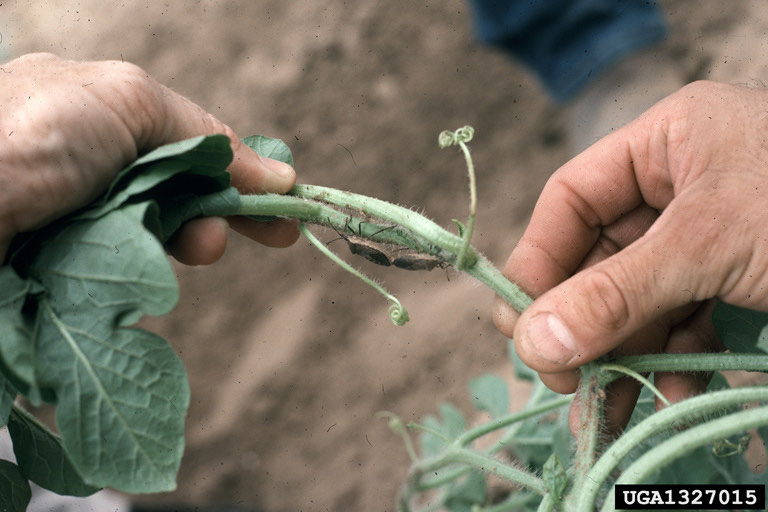
Gray-brown, shield-shaped bugs about ⅝″ long. When flipped over, the abdomen is orange — the easiest identification tell. Emit an unpleasant odor when disturbed, similar to stink bugs.
Adults and nymphs suck sap from cucurbit leaves and inject a toxin that causes rapid wilting and blackening. A heavy infestation can kill an entire plant. All cucurbits are targets — squash, pumpkins, cucumbers, melons.
Check leaf undersides for clusters of bronze-colored eggs (20–40 at a time). Nymphs are gray-white with black legs, up to ½″ long. Adults overwinter in plant debris — clear squash beds thoroughly in fall.
Hand-pick egg masses on sight. Row covers before flowering. Neem oil on nymphs (limited effect on adults). Fall debris cleanup is critical — adults overwinter in it and emerge ready to breed the following spring.
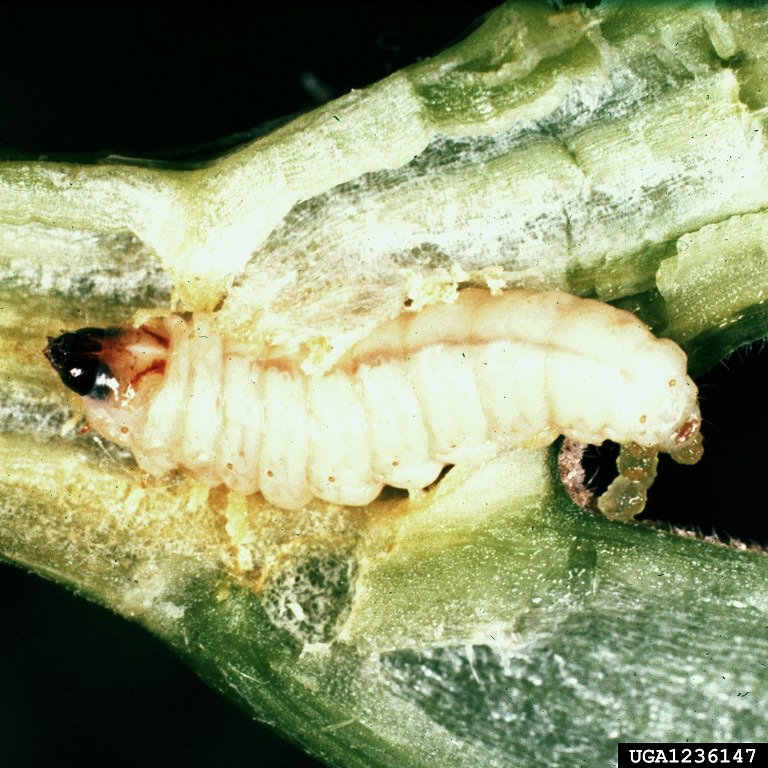
The adult is a day-flying moth with metallic green forewings and a bright orange abdomen with black dots — it mimics a wasp. You're unlikely to see the larvae, which are cream-colored and live inside the vine. East Tennessee has two generations per season, making this more damaging here than in northern states.
Larvae bore into stems and destroy the plant's vascular system from the inside. Seemingly healthy plants wilt and collapse almost overnight with no obvious external cause. Sawdust-like frass at the stem base is the telltale sign. Summer squash and zucchini are most vulnerable; butternut squash and Tromboncino have dense solid stems and are largely resistant.
Small, flat, reddish-brown eggs laid singly at the base of stems in early summer. Wilting that doesn't respond to watering. Frass (looks like wet sawdust) along the lower stem.
Row covers from transplant until female flowers form. Crop rotation every season — borers overwinter as pupae in the soil where squash grew. Plant Tromboncino or butternut instead of zucchini where pressure is severe. A second succession planting in early July will mature after peak adult egg-laying has ended.
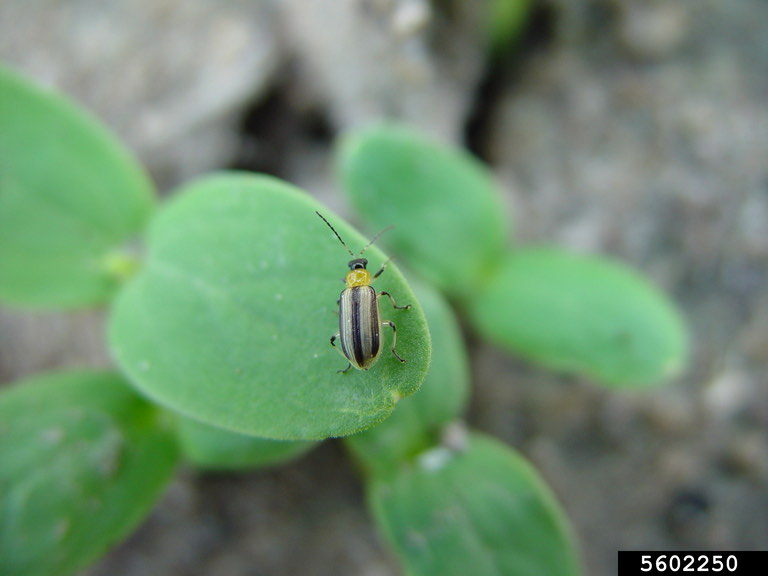
Small (¼″) yellow-green beetles. Striped type has three black stripes; spotted type has 12 black spots. Both appear in large numbers suddenly in early summer on vine and bean crops.
Adults riddle leaves and feed on flowers and fruit. More critically, striped cucumber beetles transmit bacterial wilt, a devastating disease that kills cucumbers and muskmelons. A plant can look healthy one week and be completely dead the next after bacterial wilt sets in. The Diva cucumber variety (already recommended on the Variety Guide) is parthenocarpic, which reduces bacterial wilt risk by limiting open-flower time.
Row covers until flowering. Kaolin clay (Surround WP) applied before beetles appear and reapplied every 7–10 days. Crop rotation. Remove and destroy any plant showing sudden wilt — bacterial wilt spreads through beetles, not the soil, so removing the plant reduces pressure.
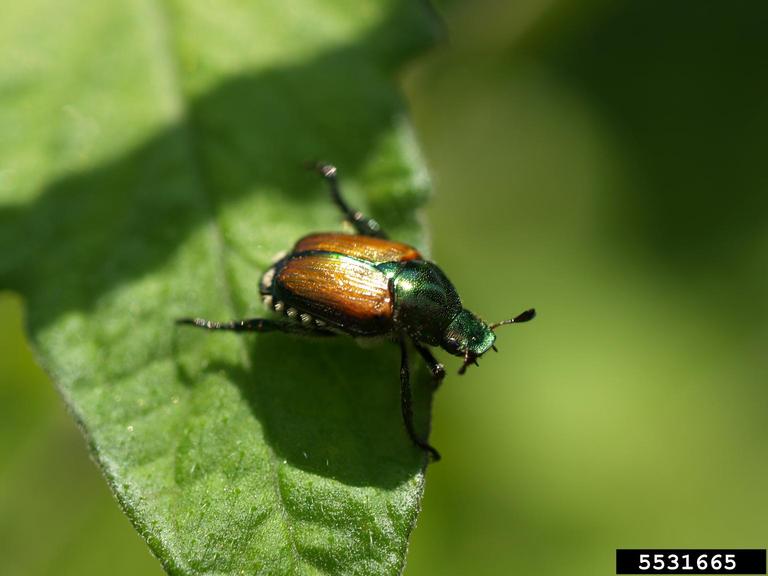
Metallic green beetles with coppery-brown wing covers, about ½″ long. Active June through July. Feed in groups — where you see one you typically see many.
Adults skeletonize foliage, leaving only the leaf veins intact. They attack more than 300 plant species but are especially damaging on beans, corn, grapes, fruit trees, and roses. Larvae (grubs) feed on grass roots underground through summer and fall.
Hand-pick in early morning when they're sluggish — drop into soapy water. Neem oil acts as an antifeedant; apply at first sign of activity and reapply after rain. Kaolin clay (Surround WP) provides a physical deterrent on foliage, particularly for fruit trees and grapes. Beneficial nematodes or milky spore applied to lawn areas in fall targets grubs and reduces next year's adult population. Avoid Japanese beetle bag traps — they attract far more beetles to your property than they catch.
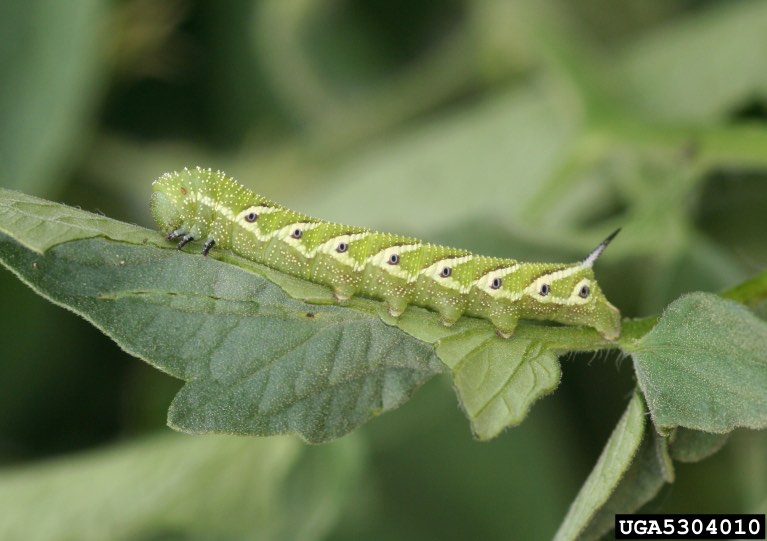
Large green caterpillars with white diagonal stripes and a distinctive black horn on the rear. Exactly the color of tomato foliage — easy to miss until damage is severe. Adults are large, fast-flying hawk moths active at dusk.
A small number of hornworms can defoliate a plant quickly. They also feed on peppers, eggplant, and potatoes. Look for dark green or black droppings (frass) on leaves below — this tells you a hornworm is feeding above.
Hand-pick and drop into soapy water. Bt (Bacillus thuringiensis var. kurstaki) spray is highly effective when applied to foliage — caterpillars must eat treated leaves, so apply at dusk when hornworms are active. Important: if you find a hornworm covered in small white rice-grain-shaped cocoons, leave it alone. Those are braconid wasp pupae — the wasps have already parasitized the hornworm and will emerge to seek out more. Destroying it wastes the best biological control you have.
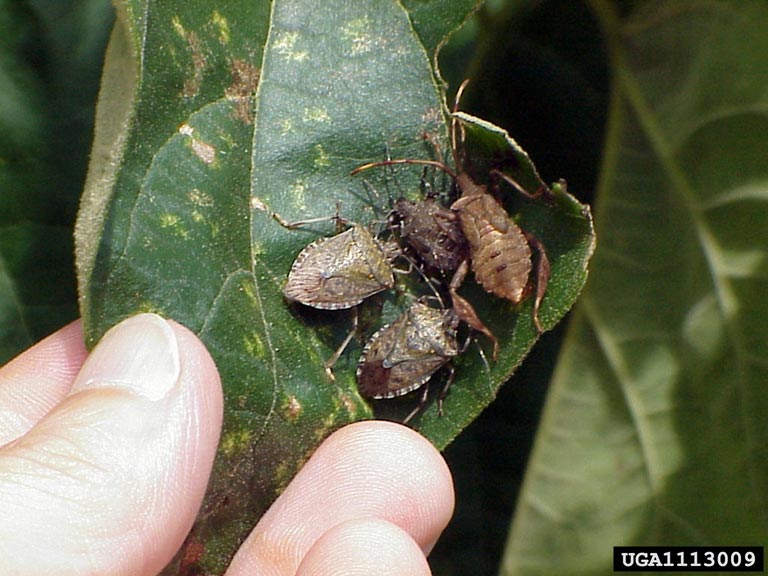
Brown, shield-shaped bugs about ¾″ long with distinctive white banding on the antennae and abdomen edges. An invasive species from Asia, first documented in Knox County, Tennessee in 2008 and now firmly established statewide. University of Tennessee research specifically found high BMSB numbers in Tennessee.
UT Extension identifies BMSB as a severe agricultural pest capable of damaging tomatoes, peppers, beans, okra, sweet corn, apples, and peaches — most of the crops on the Variety Guide. Both adults and nymphs pierce-feed on developing fruit and seeds. Damage appears as pitting, scarring, and cat-facing on fruit, and can provide entry points for fungal disease. Early-season feeding can cause premature fruit drop.
Honest answer: BMSB is difficult to control organically in the open garden. Row covers provide exclusion before flowering. Hand-picking works but they emit a strong odor when handled — use gloves or a stick to knock them into soapy water. Kaolin clay has some deterrent effect on fruit crops. Seal gaps in your home in late summer — they overwinter indoors in large numbers and the fall invasion is the aspect most Hawkins County residents notice first.
A note on pesticide traps: Japanese beetle bag traps and similar pheromone traps for other pests consistently attract more insects to your property than they remove. Research backs this up consistently. Skip them.
Hawkins County's rural landscape means deer and groundhogs are a fact of garden life for most homesteaders. The honest answer on both is the same: spray repellents are unreliable and temporary. Physical exclusion is the only thing that consistently works.
Deer browse selectively and unpredictably. Plants they ignore one season they may devastate the next, especially when natural forage is stressed by drought or heavy population pressure. Young fruit trees, beans, brassicas, and lettuce are frequent targets. Deer also cause significant damage by rubbing antlers on tree trunks in fall.
Fencing is the only reliable solution. A single-strand electric fence with a peanut-butter attractant bait teaches deer quickly. Conventional woven wire needs to be at least 8 feet tall — deer can clear lower fences easily. Spray repellents (predator urine, commercial products) provide short-term deterrence but require constant reapplication and lose effectiveness as deer habituate. Motion-activated sprinklers work moderately well for smaller areas.
Deer generally avoid strongly aromatic plants. Perimeter plantings of lavender, sage, or mint won't stop a hungry deer but may reduce casual browsing. Not a replacement for fencing in high-pressure areas.
A single groundhog can consume several pounds of vegetation daily. Broccoli, beans, peas, lettuce, and squash leaves are favorites. They also burrow extensively, which can undermine raised bed frames, stone walls, and building foundations. Groundhogs are most destructive in spring when emerging hungry from hibernation and again in late summer when building fat reserves.
A buried fence is the most reliable solution. Use hardware cloth or welded wire at least 3 feet high, buried 12 inches underground with the bottom bent outward at a 90-degree angle to prevent burrowing under. Bending the top 12 inches outward prevents climbing over. Live trapping and relocation is legal in Tennessee with a TWRA nuisance wildlife permit — contact the Hawkins County UT Extension office for local guidance. Relocate at least 5 miles away — they home back shorter distances.
Raised beds elevated at least 24 inches off the ground provide effective exclusion. Groundhogs can climb but generally won't bother if easier food is available elsewhere. Combined with an apron of hardware cloth around the base, raised beds are among the most reliable long-term solutions for small gardens.
Local resource: The Hawkins County UT Extension office at 3815 Highway 66-S can advise on nuisance wildlife management specific to your situation, including TWRA permit requirements for live trapping.
These are the natural and organic controls with the strongest evidence behind them for East Tennessee conditions. Each has real limitations — noted honestly below. "Natural" does not mean harmless to beneficial insects; timing and selectivity matter.
| Control | How It Works | Best Used For | Honest Limitations |
|---|---|---|---|
| Hand-picking High | Direct physical removal of insects, egg masses, or larvae. | Squash bug eggs, hornworms, Japanese beetles, stink bugs. Most effective when started early in the season before populations build. | Labor-intensive. Not practical at scale. Most effective as a preventive habit rather than a rescue measure once populations are large. |
| Row Covers High | Physical barrier that prevents adult insects from reaching plants or laying eggs. | Squash bugs, squash vine borers, cucumber beetles — any pest where the adult must access the plant to cause damage. Must be removed at flowering for pollinator access (or hand-pollinate). | Ineffective once pest is already present inside the cover. Requires good soil contact at edges. Creates heat buildup in summer — better for spring and early plantings. |
| Neem Oil Moderate | Azadirachtin disrupts insect feeding, growth, and reproduction when ingested. Also acts as a contact suffocant on soft-bodied nymphs. | Squash bug nymphs (good effect), Japanese beetles (antifeedant, not a knockdown), cucumber beetles (early season). Apply at dusk to reduce bee contact and leaf burn. Reapply every 7 days and after rain. | Limited effect on adult squash bugs and stink bugs. Minimal effect on squash vine borers (larvae are inside the plant). Loses effectiveness quickly in heat and UV. Must be reapplied consistently to matter. |
| Kaolin Clay (Surround WP) Moderate | Creates a physical film on plant surfaces that deters feeding and egg-laying. Does not kill insects — moves them elsewhere. | Japanese beetles on fruit trees and grapes (well-researched). Cucumber beetles. Apply before pest pressure begins and reapply every 7–10 days and after rain. Safe for beneficial insects when applied correctly. | Efficacy against stink bugs is inconsistent. Requires consistent, thorough coverage to work. Looks white on produce — washes off at harvest. Not a knockdown solution; a deterrent. |
| Bt — Bacillus thuringiensis High | Naturally occurring soil bacterium. Btk strain (kurstaki) produces proteins toxic to caterpillars when ingested. Does not harm mammals, birds, or bees. | Tomato hornworm. Highly effective when applied to foliage at dusk (when hornworms feed). Caterpillars stop feeding quickly after ingesting treated leaves and die within days. Sold under trade names Dipel, Thuricide. | Only effective against caterpillars — not beetles or bugs. Must be ingested to work, so coverage matters. Breaks down quickly in UV light; reapply every 5–7 days. Will also kill monarch and other butterfly caterpillars — apply carefully and avoid spraying near milkweed. |
| Beneficial Nematodes Moderate | Microscopic soil-dwelling organisms that parasitize soil-dwelling larvae and grubs. | Japanese beetle grubs in lawn areas (fall application). Cucumber beetle larvae in soil. Apply to moist soil in early evening; water in well. Most effective when soil temperature is 55–90°F. | Targets larvae only — no effect on adults. Requires moist soil conditions; East Tennessee summer drought can reduce effectiveness. Results are gradual and build over seasons, not immediate. |
| Milky Spore Moderate | Bacterial disease (Bacillus popilliae) specific to Japanese beetle grubs. Grubs ingest spores, die, and release billions more spores into the soil. | Japanese beetle grub control in lawn areas. Long-term solution — once established, can persist in the soil for 10+ years. | Takes 1–3 years to establish at effective levels. Works best in warmer soils; Tennessee's climate is favorable. Targets Japanese beetle grubs specifically — does not affect other pests. |
| Crop Rotation High | Moving crops to different garden locations each season prevents pest populations from building in the soil where their host plants grow. | Squash vine borers (overwinter as pupae in soil). Cucumber beetles (larvae in soil). Essential practice, not optional, for cucurbit growers. | Requires planning and adequate garden space. Does not help when pest pressure comes from surrounding areas outside the garden. Less effective in small gardens with limited rotation options. |
| Parasitic Wasps High | Native braconid and other parasitic wasps naturally parasitize hornworms, aphids, and other pests. Already present in most Hawkins County gardens. | Tomato hornworm. A hornworm covered in white rice-grain-shaped cocoons has already been parasitized — leave it and the wasps will emerge to parasitize more. Attract wasps by planting dill, fennel, Queen Anne's lace, and other umbellifers near the vegetable garden. | Cannot be purchased or applied — must be supported by reducing broad-spectrum pesticide use that kills them. Takes time to establish as a meaningful population in the garden. |
The most important principle: Broad-spectrum pesticides — even organic ones like pyrethrin — kill beneficial insects alongside pests and can make pest problems worse the following season by removing natural predators. Start with physical controls, know your pest's life cycle, and reach for sprays only when damage is severe. The Hawkins County UT Extension office at 3815 Highway 66-S offers free pest identification and IPM guidance. UT Extension publication PB595 (You Can Control Garden Insects) covers conventional and organic options in depth.
Local experience beats any guide. Our monthly presentations cover everything from seed starting to food preservation — and members share what's actually working in their gardens. Join us on the second Tuesday of every month in Rogersville.
See Upcoming Events